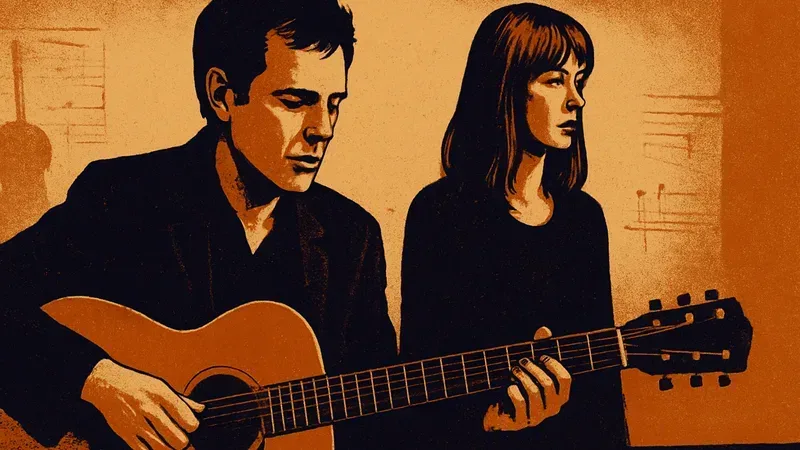
Prefab Sprout songs often feel like they've always existed. The melodies arrive fully formed. The choruses settle in without force. But underneath that ease, the structures are unusual, the lyrics are packed with wordplay and unexpected turns, and the arrangements shift between sparse and lush without warning. This is pop music that rewards attention without demanding it.
📋 Quick facts
- Style: Sophisticated pop with folk, jazz, and art-rock touches
- Years active: 1978–present
- Origin: Witton Gilbert, County Durham, England
- Core lineup: Paddy McAloon, Martin McAloon, Wendy Smith
- Key era: 1985–1990
- Label: Kitchenware, CBS, Epic
🎵 The quiet genius
Prefab Sprout are built around Paddy McAloon's songwriting and Wendy Smith's harmonies. McAloon writes songs that are structurally ambitious, lyrically dense, and emotionally direct. Smith's vocals soften the edges, turning what could be academic into something warm. The rhythm section, anchored by Martin McAloon, stays steady while the arrangements roam. They are a pop band, but one that operates on its own terms.
This is pop music that rewards attention without demanding it.
🕰️ History
Formed in 1978 by brothers Paddy and Martin McAloon, the band added vocalist Wendy Smith in 1982. Their debut Swoon (1984) was critically admired but commercially modest. The breakthrough came with Steve McQueen (1985), produced by Thomas Dolby, which sharpened their sound without losing the quirks. From Langley Park to Memphis (1988) brought their biggest single, and Jordan: The Comeback (1990) is widely considered their peak.
After that, releases became sporadic as McAloon dealt with health issues, though albums continued into the 2010s.
⚠️The case against them: The later catalogue is uneven. Andromeda Heights (1997) and The Gunman and Other Stories (2001) are overlong and over-arranged, losing the tension that made the earlier work compelling. McAloon's ambition sometimes outruns his editing, and the gaps between albums make it hard to track a clear development. For listeners who prefer directness, the wordplay can feel fussy.
🧩 The easy complexity
The central paradox of Prefab Sprout is that their songs are both intricate and effortless. McAloon writes verses that twist through multiple ideas, choruses that land without repetition, and bridges that change the mood entirely. Yet the production—especially on Steve McQueen and Jordan: The Comeback—keeps everything clean and airy. The complexity is there, but it never gets in the way.
🎤 The voice and the words
McAloon's vocals are unshowy, nearly conversational, which lets the lyrics sit front and center. Smith's harmonies add a second layer, often carrying the melody while McAloon delivers the verse. This division of labor is key: Smith provides the hook, McAloon provides the detail. On songs like "Goodbye Lucille #1," the arrangement builds around this interplay, with strings and horns arriving only when the song has earned them.
🌟 Why they matter
Prefab Sprout made pop music that took songwriting seriously without becoming pretentious. McAloon's lyrics are full of literary references and wordplay, but they never feel like homework. The band's best work sits alongside the finest pop of the 1980s and 1990s, distinguished by its refusal to settle for easy formulas. They remain a touchstone for anyone who believes pop can be intelligent without sacrificing warmth.
🔍 Curiosities
- The band's name comes from a poem Paddy McAloon wrote as a teenager.
- The album Protest Songs was recorded in 1984 but shelved until 1989; the title is ironic, as the songs are love songs.
- McAloon's hearing problems and other health issues contributed to the long gaps between albums after the 1990s.
🚀 Where to start
The best entry point is Steve McQueen (1985), which balances the band's quirks with accessible production. Jordan: The Comeback (1990) is the fuller statement, a double album that earns its length. Skip the later records until you're curious about where McAloon's ambitions took him after the peak.
💡Pro tip: Start with Steve McQueen for immediate hooks, then move to Jordan: The Comeback for the full artistic statement.
🎧 Essential tracks
When Love Breaks Down
1985 - Steve McQueen
The definitive Prefab Sprout song. McAloon's lyric about a relationship's mechanics is delivered with a melody that feels inevitable, and the production leaves enough space for the words to land.
Listen: Spotify · Apple Music · YouTube
The King of Rock 'n' Roll
1988 - From Langley Park to Memphis
Their biggest hit, built around a spoken-word hook and a wry observation about fame. It shows how McAloon can make a pop song out of an idea that would be a throwaway for anyone else.
Listen: Spotify · Apple Music · YouTube
Goodbye Lucille #1
1990 - Jordan: The Comeback
A masterclass in arrangement. The song starts spare and gradually adds strings and horns, each layer earned. Smith's harmony on the chorus is the emotional anchor.
Listen: Spotify · Apple Music · YouTube
Cars and Girls
1988 - From Langley Park to Memphis
A driving, nearly motorik rhythm section supports a lyric that critiques Bruce Springsteen's Americana. It's funny, clever, and propulsive.
Listen: Spotify · Apple Music · YouTube
Appetite
1985 - Steve McQueen
A tense, nearly minimalist track that shows the band's range. The bassline is insistent, the vocals are almost whispered, and the song builds to a release that feels earned.
Listen: Spotify · Apple Music · YouTube
📚 Related articles
- Sparks: The Art of Controlled Chaos in Pop - Another band of brothers making intricate pop that feels effortless, with a similarly theatrical and witty approach.
- Rush: The Power Trio That Made Complexity Feel Like Pop - Like Prefab Sprout, Rush made technical complexity accessible and rewarding, but with a very different sound.
📖 Sources
Prefab Sprout Wikipedia
Discography MusicBrainz

Comments (0)
Leave a Comment
Be the first to comment!